Roofing Tear-Off Dumpster Sizing Guide for Johnson City
Shingles are dense, and weight — not volume — is what actually limits a roofing dumpster. Here's how to size a tear-off correctly the first time.
7 min readUpdated 2026-02-17By JK Dumpster Rental
Why Roofing Debris Fills a Container Faster Than You'd Think
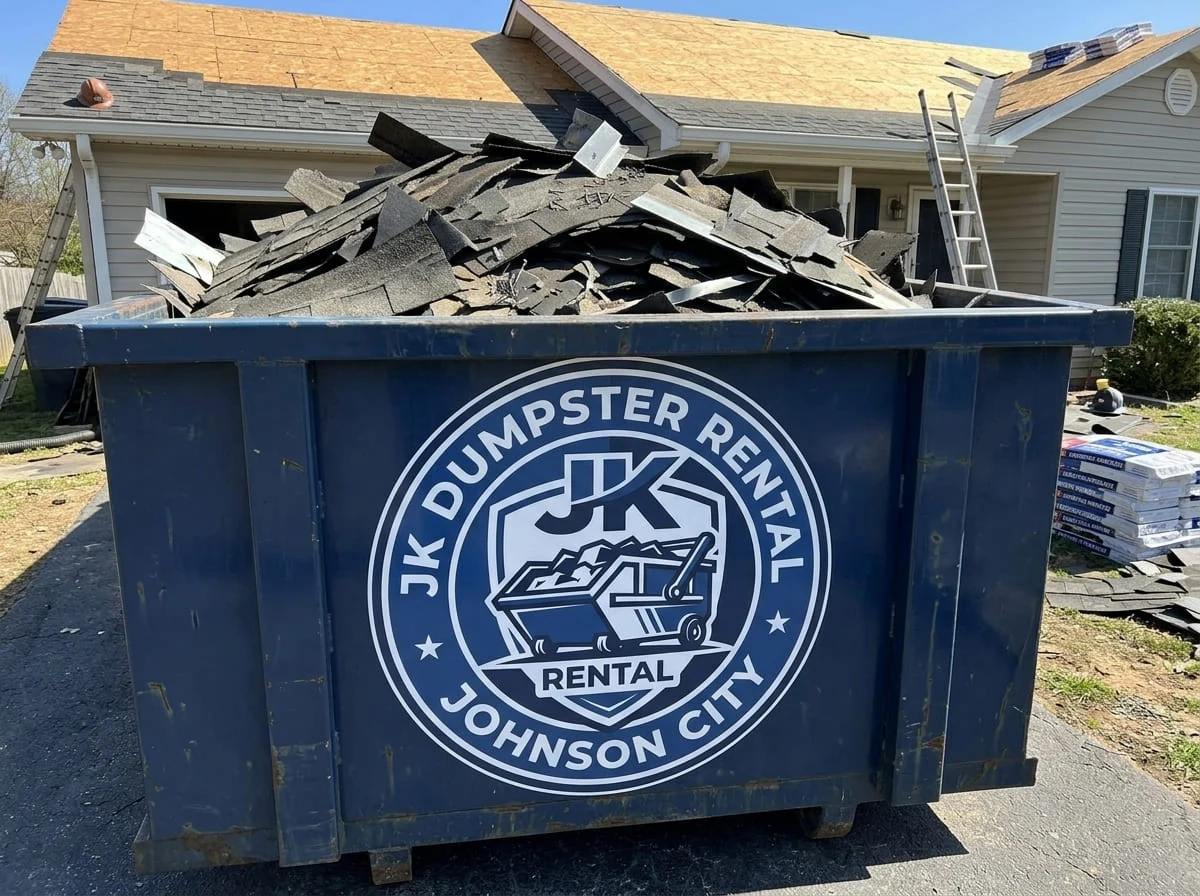
Roofing shingles are dense and heavy for their size, especially in multiple layers or when soaked from a recent storm. That means a roofing dumpster almost always hits its weight limit long before it looks visually full — a container that appears half-empty by volume can already be at capacity by weight. This is the single most common sizing mistake on a reroof: guessing based on how much space the debris takes up, rather than how much it actually weighs.
Matching Size to Roof Size
A single-layer tear-off on a small to mid-size roof — a typical single-story Johnson City home — usually fits comfortably in a 10 or 15 yard container. A larger roof, a multi-layer tear-off, or a job that combines roofing with some structural decking replacement more often calls for a 20 yard. Bigger homes, commercial roofing jobs, or projects removing more than two layers of old shingles typically need a 20 to 30 yard to stay within a reasonable weight allowance without a mid-job swap.
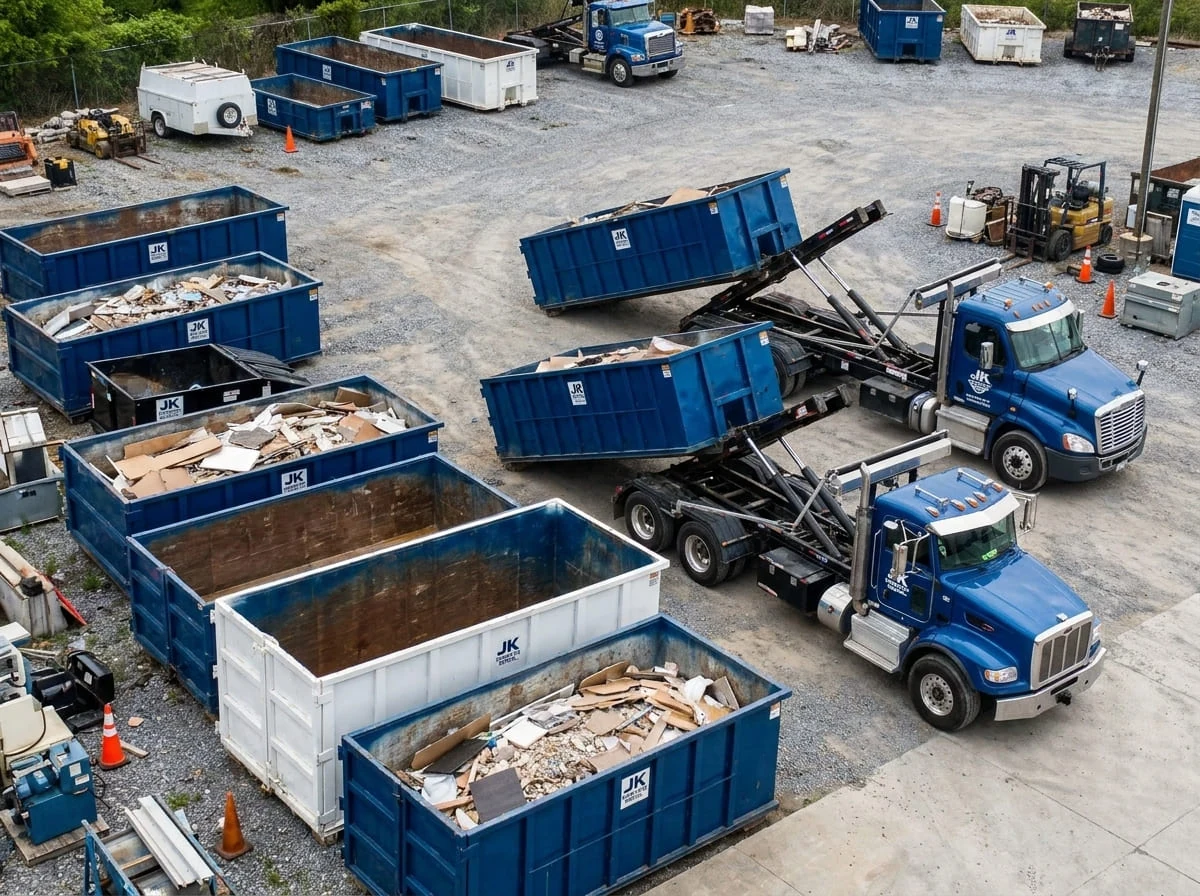
Roll-off dumpster sizes available in Johnson City, TN and across Washington County
A roofing dumpster typically holds more than just old shingles — underlayment, flashing, damaged or rotted decking boards, old gutters, and nails all come off in the same tear-off. Each of those adds weight differently: decking is bulky, flashing and gutters are metal and dense in small volumes, and nails and debris fines settle into gaps and add up more than people expect.
Why Roofing Stays Steady Work Around Here
Roofing demand across Washington County tends to track two separate patterns worth telling apart. One is storm-driven: Northeast Tennessee's spring severe-weather season brings damaging wind and occasional hail that can trigger a wave of post-storm roof inspections and repairs (see our spring tornado season prep guide for the full seasonal picture). The other is simply routine maintenance on an established housing stock — a roof reaching the end of its service life has nothing to do with weather. It's worth telling us which situation applies to your project when you call, since storm-related tear-offs sometimes come with more layered or waterlogged debris than a routine reroof.
Sizing Up When You're Not Sure
Avoiding a mid-job overage matters more on a roofing crew's tight schedule than on almost any other kind of project. If you're not sure whether your roof will fit comfortably in a given size, it's worth erring one size up rather than one size down — a partially filled container costs less in hassle than a swap-out mid-tear-off. Tell us your roof's approximate square footage and how many layers are coming off when you call, and we'll size it based on actual weight expectations, not a guess.
Driveway Access for a Roofing Job
Roofing crews typically need the container placed close to the house for efficient loading, often right in the driveway. Most Johnson City homes handle this without issue, but hillside properties near the ridgelines that ring the valley sometimes need a bit more planning — tell us your address and access situation when you call so we can plan placement that keeps the container within easy reach of the ladder and tarp line.
Booking a Roofing Dumpster
Call (423) 740-6063 and describe the job — roof size, number of layers, and timeline. We'll size the right container and get it delivered so it's ready when your crew starts tearing off, priced flat-rate based on size, materials and duration.
JK Dumpster Rental
Written by the team that coordinates every delivery out of our yard on 2303 S Greenwood Dr in
Johnson City. We haul roll-offs across Washington County every week. Questions about
your own job? Call (423) 740-6063.
Talk to a real person
Ready to book a container in Johnson City?
Call and describe the job. Flat-rate pricing, a sized container, and a delivery time on the same call.
A single-layer tear-off on a typical single-story home usually fits a 10 or 15 yard. Larger roofs or multi-layer tear-offs more often need a 20 to 30 yard.
Why does a roofing dumpster fill up so fast even though it looks empty?
Shingles are dense and heavy. A roofing container almost always hits its weight limit before it looks visually full, which is why weight — not volume — should drive sizing.
Can I put old gutters and flashing in a roofing dumpster?
Yes — a roofing dumpster typically handles underlayment, flashing, damaged decking and old gutters along with the shingles themselves. Mention the full scope of the tear-off when you book.
Is reroofing in Johnson City usually storm-related?
Some of it is — spring severe weather across Northeast Tennessee drives a share of local roofing demand — but plenty of reroofing here is routine maintenance too. Tell us which applies to your project when you call.
The Tweetsie Trail follows one of Johnson City's real old rail corridors, and the neighborhoods along it carry some of the city's older housing stock. Here's what renovation and cleanup looks like in the area.
Johnson City is named for a local merchant, not a president — and its state charter has an exact, well-documented date. Here's the real founding history, hedges and all.
Spring is Northeast Tennessee's real severe-weather season — Johnson City sits well inland from any hurricane-landfall zone. Here's what the National Weather Service data actually shows, and how to plan cleanup around it.